4 Quadrants of Time Management Matrix - Weekly Planning
Published: October 1, 2018

People do things differently, but do you know what most of us have in common?
We do the most urgent things first, not considering if it’s the most important. You may say yes, it’s normal because that is how things are usually done.
The truth is you’re wrong. Here’s why: There are classifications in everything you do in life.
First is the urgency of the matter (urgent or not urgent) and second, by its importance (important or not important).
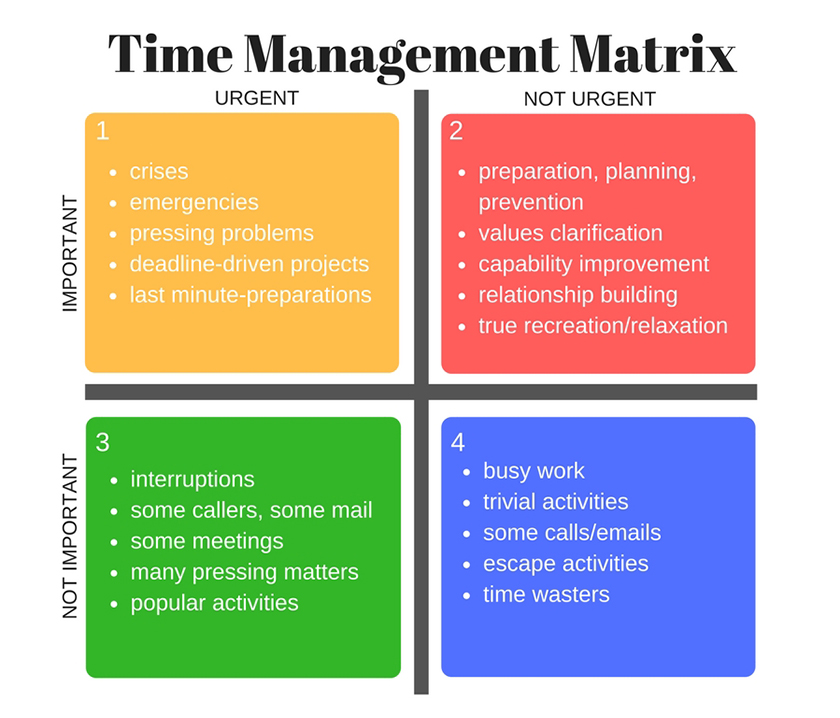
We can then create these time management quadrants: Organizing tasks within this framework helps prioritize effectively and focus on more constructive activities.
-
Matters that are Important and Urgent. These are things such as crises, emergencies, or deadlines. Remember that business proposal you worked overtime because it’s due the next day? This is an example of a matter that should be done right now. But it was stressful, right? But remember it was given weeks before the deadline? This is to point out how important matters should be addressed before they become urgent to avoid stress and conflicts.
-
Matters that are Important but Not Urgent. This is where you should focus and spend your time. It is all about planning. Addressing these matters helps you do the task more effectively. And in doing so, you actually learn more out of those tasks. This is a quadrant of opportunities, opportunities to learn, to improve yourself or your relationship with people, and see what’s in store for you.
-
Matters that are Not Important but Urgent. This is where most of us sit. We tend to focus on matters that are urgent without thinking if it’s important. The problem with this is we lose track of the important matters. That phone call amidst your date with your wife. It deviates you from what you should be prioritizing at the moment. It affects your priorities just because it’s urgent.
-
Lastly are matters that are Not Important and Not Urgent. Obviously, these are what they call time wasters. Thus, these are mostly matters you shouldn’t spend so much time on, like that mindless Facebook-scrolling or binge-watching movies. These matters aren’t really that helpful to you so it would be useful to limit your time on these things.
This decision matrix, also known as the 4 Quadrants of Time Management matrix, is the brainchild of Dwight Eisenhower, the decorated army general and President of the United States. His significant role as a five-star general during World War II inspired the development of this time management tool.
He said we should identify ourselves with several roles. You can be a husband, a mother, a daughter, or a businessman.
These roles can change though. They depend on what you consider as a priority. These priorities would serve as guides for the tasks at hand for each role.
Let’s say your priority as of the moment is being a mother, you then spend more time taking care of your children.
Additionally, other roles would need to cope with the change in priority. Your awareness for each role and your priority lets you balance everything.
Also, if you are looking to better manage time - consider investing in time tracking software or a time planner app for yourself and your team. With an app that helps you keep track of time spent on tasks, you can analyze what tasks consume most of your work hours, what are the priorities for your team, and how you can cut down on time spent to get things done.
All in all, Eisenhower’s purpose for the four Quadrants time matrix is to achieve real progress in life. Life isn’t just about being an employee or a boss. It’s a mix of everything. By ensuring harmony between the roles, we can achieve our goals.
What is the Time Management Matrix?
The Time Management Matrix is a powerful tool used to categorize tasks based on their urgency and importance. First introduced by President Dwight Eisenhower in 1954, it is also known as the Eisenhower Matrix. This matrix has become a staple in both business and personal time management strategies, helping individuals and organizations prioritize tasks, identify time wasters, and enhance productivity.
By using the Time Management Matrix, you can effectively manage your time, prioritize tasks, and achieve your goals. Whether you’re juggling work responsibilities or personal commitments, this matrix provides a clear framework to organize tasks and focus on what truly matters. It also supports better decision making and enables more informed decisions regarding which tasks to prioritize. It’s not just about getting things done; it’s about getting the right things done. Utilizing the matrix can significantly enhance personal productivity.
Understanding the 4 Quadrants
The Time Management Matrix consists of four distinct quadrants, each representing a different level of urgency and importance. Understanding these quadrants is crucial for effective time management and can significantly impact your productivity and stress levels. Understanding how each task fits into the matrix is key to effective prioritization and helps you place tasks where they will be most productive.
-
Quadrant 1: Urgent and Important Tasks This is the urgent and important quadrant, where you place tasks that are both urgent and important and require immediate attention. These are your most urgent tasks and urgent issues, such as project deadlines, emergencies, and pressing matters that demand urgent attention. Handling these tasks promptly is essential to avoid crises and maintain smooth operations.
-
Quadrant 2: Important but Not Urgent Tasks Tasks that are important but not urgent are vital for long-term success and personal and professional growth. Assigning tasks that are complex tasks or related to time sensitive goals to this quadrant can help with long-term planning and prevent them from becoming urgent. These include activities like planning, research, and relationship-building. By focusing on these tasks, you can prevent important tasks from becoming urgent and create a more balanced and proactive approach to your responsibilities.
-
Quadrant 3: Urgent but Not Important Tasks This quadrant is often referred to as urgent and not important, and is where you should place tasks that are time sensitive but not critical. Tasks that are urgent but not important often distract you from more critical tasks. These can include responding to non-essential emails, attending unnecessary meetings, and getting sidetracked by social media. Delegating or automating these tasks can free up valuable time for more important activities.
-
Quadrant 4: Not Urgent or Important Tasks This quadrant is for low priority tasks and time wasters, such as excessive TV watching, playing video games, and other leisure activities that do not contribute to your goals. Minimizing time spent here is essential for productivity, as these tasks are neither urgent nor important and can detract from your overall effectiveness.
To optimize productivity and avoid inefficiency, it is important to assign each task to the appropriate quadrant. Regularly re-evaluating your task placement ensures that tasks are not misclassified, helping you prioritize effectively and reduce stress.
Assigning tasks to the correct quadrant and understanding where each task fits helps streamline your workflow and ensures you are focusing on what matters most.
7 Most Useful Teacher Planners
Weekly Digest for Effective People #5
April 30 to May 6
Identify All Your Tasks
Start by listing everything you need to do. Effective task management is crucial here. Use tools like the Eisenhower Matrix to organize and prioritize tasks based on urgency and significance. This will help you categorize, delegate, and focus on high-priority tasks, optimizing your overall workflow.
Determine Urgency and Importance
Next, assess each task's urgency and importance. This step helps you understand which tasks need immediate attention and which can wait. It's also important to differentiate between other tasks that may require extensive planning or can be postponed without immediate consequences, such as capacity-building activities or scheduled events.
Eliminate or Delegate
Once you've identified and categorized your tasks, decide which ones you can eliminate or delegate. Delegating tasks can free up your time for more important activities and allow team members to develop their skills, thereby improving overall productivity and focus on long-term goals.
Applying the Time Management Matrix to Your Daily Routine
To apply the Time Management Matrix to your daily routine, follow these steps:
-
Identify All Your Tasks: List everything you need to do, including work, personal, and leisure activities.
-
Determine Urgency and Importance: Use the matrix to categorize each task based on its urgency and importance.
-
Prioritize Tasks: Focus on urgent and important tasks first, followed by important but not urgent tasks.
-
Schedule Tasks: Allocate specific times for each task, ensuring that critical tasks are given priority.
-
Eliminate or Delegate: Identify tasks that are not urgent or important and either eliminate them or delegate them to others.
-
Review and Adjust: Regularly review your schedule and adjust as needed to stay on track and ensure you’re focusing on the right tasks.
By applying the Time Management Matrix to your daily routine, you can prioritize tasks effectively, manage your time more efficiently, reduce stress, and increase productivity. This structured approach helps you achieve your goals and improves your overall quality of life.
Key Benefits of the Time Management Matrix
The time management matrix offers a range of key benefits for anyone looking to take control of their schedule and boost productivity. By categorizing tasks into four distinct quadrants based on urgency and importance, the management matrix helps you prioritize tasks that truly matter. This approach ensures that urgent and important tasks receive immediate attention, reducing the risk of last-minute stress and missed deadlines.
One of the standout advantages of the time management matrix is its ability to highlight critical tasks, allowing you to allocate your time and resources more effectively. By focusing on important tasks before they become urgent, you can prevent crises and maintain a steady workflow. This not only leads to increased productivity but also supports a healthier work-life balance, as you spend less time firefighting and more time on activities that contribute to your personal and professional growth.
Additionally, the matrix divides tasks in a way that makes it easier to identify and eliminate time wasters, ensuring that your efforts are aligned with your long-term objectives. By making better decisions about where to invest your energy, you can achieve greater satisfaction in both your personal and professional life. Ultimately, the time management matrix offers a clear, structured approach to organizing your workload, helping you stay focused, reduce stress, and make meaningful progress toward your goals.